Sunday, October 19, 2014

William Lee Odom


October 19, 2014

When I was growing up in Texas, I played on a Little League baseball team that was coached by my Uncle John. His son, Bill, who was 2 years younger, also played on the team. Bill put all he had into each game, even though baseball turned out not to be his strong suit; however, even as a kid, Bill excelled in other areas. For example, at ten years old, he had memorized what all the state car tags looked like, and could identify them before the rest of us could even make out a letter. He continued developing similar skills as he grew up, recently retiring as court reporter for the Speaker of the U.S. House of Representatives.

Although retired, Bill was still “young” and physically fit enough to try other directions. He moved to Flagstaff, as it was half-way between his son, John Lee, an actor in Los Angeles, and family in the east, found a nice job in a deli, and a friendly apartment complex to live in. He was excited and happy in his new adventure.

On Saturday, October 18, I received the news that my cousin, Bill Odom, was found dead in his apartment in Flagstaff, Arizona. Friends and family had not received replies to contacts in five days of trying, so the complex staff sent someone to investigate. Bill lived alone. It will be awhile before we know anything else.

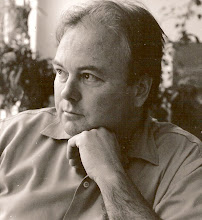
Here is a photo of Bill, probably the last one ever taken of him. It was taken at a Walgreen’s store in Flagstaff by the photo technician. Bill had taken some film there for processing on August 23. He had sent this photo and some others of his new place to me in September. Since retiring, Bill had been able to visit me twice in the last year. Bill’s mother, Ruthie Jean,  was a sister of my mother. We exchanged many letters and visited by phone calls often through the years. Bill was my cousin and my friend.


  William Lee Odom Nov. 23, 1951 — October, 2014

Saturday, October 18, 2014

ANOTHER ARRIVAL

Charlie has arrived at Columbia C.I. Friday, October 17, 2014.
It is just east of Lake City, Florida, off of Highway 90.
 
Here’s his new address:
 
Charles Norman  881834  G-3
Columbia Correctional Institution
216 S.E. Corrections Way
Lake City, FL  32025
 

Thanks for your prayers!
as always, he appreciates mail.
 
Here we are on our first visit Saturday, Oct. 18


Monday, October 13, 2014

On The Road Again…Yes, Really


Monday, October 13, 2014
 
I’m no longer at Cross City C.I. Tonight, 10/13/14, I’m dictating this message to Libby from Lake Butler RMC West Unit, supposedly going to Columbia C.I. in Lake City, Florida. That is not an especially good place according to the grapevine — a lot of violence and stabbing incidences.

I was there before, 1998 to 2002, and had no problems; in fact, that’s where I met my dear wife  in 2000, a good memory in an otherwise evil place.

If, by chance,  you intended to write by snail mail, please hold off until Libby can confirm that Columbia is actually where I land (on my feet this time, hopefully). After getting the false weapons d.r. at Double-Cross City and its subsequent dismissal, I’ve been expecting a move, the proverbial other shoe.

As always, please keep us in your prayers, and we’ll do the same for you. God is good, all the time.
thanks, and be safe,
Charlie

Sunday, September 21, 2014

HOW I FIRST CAME TO LOVE POETRY


I haven’t thought of this in almost sixty years, and it amazes me that the little snip of memory has persisted in some crevice of my brain, surviving unscathed to the present day.

We lived in a little white house on a hill owned by the Clarys, a fine older couple who were relatively well-off for rural Redwater, Texas. They had running water and indoor plumbing. We did not.

I must have been around five. It was some time long before first grade. My father read a lot of magazines when he was home and not sleeping, from long hours at his job at Lone Star Ordnance Plant.

One day he burst out laughing at something he read, and I went over to him. It was a humorous poem title, “Woman,” but when he read it aloud to my mother, who was stirring a pot of great northern beans on the stove, she was not amused.

My father sat me on his lap and told me to repeat the verses after him. Although I didn’t understand all the words, I quickly memorized and repeated them to my father. I’ll never forget his booming laughter every time I recited it.

When we went to my grandparents’ house, he had me recite the brief poem to them and a couple of uncles, and everyone burst out in laughter again. I was so thrilled to be the source of such glee among my family that I didn’t need much prompting. When we went to the general store for ice cream, my father had me recite it to the couple behind the counter. The barber thought it was hilarious, as did a couple of my father’s coworkers. When we visited my Uncle Rufus and Grandma Norman in Dade City, Florida, my Uncle Rufus guffawed, which led to him and my father taking me around to my uncle’s friends to hear his nephew’s poem. Looking back, I wonder what was more amusing, the words of the little poem that were so characteristic of the early 1950's culture, or its recitation by a small boy who surely did not understand all that he was reciting. Perhaps it was a combination of both.

Amazingly, every verse is still burned into my memory. Looking back, that little poem, my first experience with poetry and memorization, may have been the seed that grew into a lifelong love of poetry — reading, reciting, and writing. Although not politically correct in our sensitive modern era, in 1954, to hear a little boy recite it was great fun. Thanks, Daddy.

Charlie

This is the verse as Charlie recited it:

WOMAN

She’s an angel in truth,
A demon in fiction,
Woman’s the greatest
of all contradiction.

She’s afraid of a cockroach,
She’ll scream at a mouse,
But she’ll tackle a husband
As big as a house.

It is actually a partial section from a poem by Alfred J. Krieg:


AN ANGEL IN TRUTH, A DEMON IN FICTION

She’s an angel in truth, a demon in fiction A woman’s the greatest of all contradiction She’s afraid of a cockroach, She’ll scream at a mouse
But she’ll tackle a husband as big as a house She’ll take him for better, She’ll take him for worse She’ll split his head open and then be his nurse
And when he is well and can get out of bed She’ll pick up a teapot and throw at his head She’s faithful, deceitful, keen-sighted and blind She’s crafty, she’s simple, she’s cruel, she’s kind
She’ll lift a man up, she’ll cast a man down She’ll make him her hero, her ruler, her clown You fancy she’s this, but you’ll find that she’s that For she’ll play like a kitten, and fight like a cat.

-Composed by Alfred J. Krieg

(circa 1950)

Saturday, September 20, 2014

ESCAPE FROM THE PANHANDLE PART TWO


Saturday. August 16, 2014

DAY FIVE

I am surrounded by dying men. On Day Five of my odyssey from Okaloosa to some place south, I find myself inside a stifling room packed with seventy-plus fellow prisoners who suffer with me. Four bunks down from me lies a cadaverous, shrunken man with most of his jaw eaten away by a cancer that has spread to his lungs and other parts of his failing body. He is one of many.

This prison is officially called  the North Florida Reception and Medical Center-West Unit, at Lake Butler, Florida, but to thousands of old-timers it’s called RMC Butler, or “Wild, Wild West.”  It has tamed down a lot over the years, like most of us, but still retains vestiges of its old, violent reputation.

A percentage of my fellow prisoners, like me, are in transit, waiting for our seats on the prison bus to somewhere else. Another portion of men are here for the “medical” aspect of RMC, and range from those with fairly minor impairments that require them to stay here for treatment, to those who are terminal, but still “ambulatory.”

“Ambulatory.” What a word that is. If you can still struggle up from your bunk and make it to the chow hall and back, you are considered ambulatory, and can stay here at Wild, Wild West. But once you fall and can’t get up, you get taken to the RMC Main Unit, where the prison hospital is located. These dying old men strive to function here, as a matter of personal hope, but many are in the “denial” phase of Elizabeth Kübler-Ross’ seven stages of dying.

I didn’t think I would still be here today. I wrote about Days One, Two, and Three the day after I got here, after the bus trip to Hell and back, and expected to be awakened and ride south to Orlando, but again the Passover Angel tapped others to leave. I’m not complaining. I needed the recuperation time after what I went through at NWFRC, or Washington C.I. Annex, which I’ll write about at another time, and the cruel and unusual punishment I endured from sadistic prison guards. The high point of the week was getting a much-needed visit from my wife, Libby, today.

After having to spend hundreds of dollars to travel to the Panhandle each time she came to visit, and endure more travails, Libby had a relatively short, one hour drive from Jacksonville, through the North Florida woods to visit me today. You should be able to see my happiness in the photo she included with my Part One update. After the prison Hell Week, the people in charge of visiting were surprisingly courteous and relaxed, allowing us to have one of our best visits in a long time, not counting our May 24th marriage (The Best). We got to walk around outside, on the grass, in the sun, which was a welcome change from being forced to make little circles inside a cage bristling with video cameras and surly guards watching every move we made, as if we were Taliban terrorists at Guantanamo.

When I see a very old man in prison, I try to look at his I.D. card, at his name and prison number, to see if I know him. The old-timers have aged so badly that many men I once knew in years past I don’t recognize.

This one old man had a “024…” number from 1968! I thought he must be 85 or 90 years old, at least, but his card said he was born in 1946. 1946! That couldn’t be right. No way this walking skeleton could be only three years older than I am. But he was. I recognized his name, Freddie Yokom, who I knew over thirty years ago at “The Rock,” Raiford, Union C.I., but not the person in front of me now. What happened to that thirty-something highly competent vital man who ran the prison canteen operation several decades ago? Dying in prison. Talking was very difficult with the missing jawbone and the embarrassing constant drool, but he could whisper a little to me at a time. We talked.  

Another man walked over to my bunk when I first began writing this. He had to be in his sixties, and stood there smiling, waiting for me to notice him.

“You don’t remember me, do you?” he said.

I confessed I didn’t, that there had been thousands of men who’d known me over the years, but only one of me. I asked him to tell me who he was, where he knew me from, etc., but when he repeated the litany of prisons and the dates he’d been there, I realized that none of our imprisonments had coincided, that I could not have forgotten him, since I’d never known him. That happens, too, the failure of memory, after decades of imprisonment. Like vast herds of zebras and wildebeests on the Serengeti, we all look the same. The predators can pick out the old, the sick, and weak, and “cull” them, a polite word for “eat.” We all await being culled.

When I came in from the air conditioned visiting park at three p.m., the sun scorched the asphalt, the heat penetrating the soles of my shoes. The TV weatherman said it was 95 degrees with a heat index of 105 degrees, again, just like the last several days. Inside the sweltering dorm, the asphalt roof shingles absorbed the heat and passed it into oven we were confined inside. It seemed hotter inside than outside. The only relief came from several meager slowly spinning ceiling fans and a wall fan that stirred the syrupy hot air. Men lay around like lizards on hot rocks in the Galapagos, somnolent.

Count time. Four o’clock, the hottest hour of the endless day. A young pregnant guard came out with a young male guard to count us. No talking, no whispering, silence. When a guard — especially a young white female — exhibits hostility or a harsh tone, it is a given that some young black prisoner in the herd will rise to the bait and respond. Can’t help it. It is a prison syndrome.

So he did. She stopped, anger contorting her features beyond her brief years. Taking prison personally — a fatal flaw. She can’t identify the malefactor in the crowd, so she does what she is conditioned o do — punish everyone.

Back in her air-conditioned guard booth she shut off the fans. No air, no ventilation. What do they call them — induction ovens? I’ve seen them on TV. Multiply the dimensions to our human warehouse size, and seventy men began to bake. After spending most of last Wednesday in the Easy-Bake prison bus oven, 110 degrees or more seemed balmy. I lay there quietly meditating, controlling my breathing, centering myself, waiting for someone else to raise their head above the foxhole and take the shot.

One did. Another young black prisoner went to her door, loudly complained about the torture, she yelled at him, then, allowing five more minutes to make it look like she was doing us a favor, the fans came back on.

I shook my head at the thought of such a young person becoming hostile, jaded, and sadistic so soon in her corrections career that she had no qualms about inflicting misery on seventy people who had done nothing to her. I wonder how those traits will develop, fester, and manifest themselves in years to come, as she gets more comfortable with abusing her authority. The older ones train and encourage the younger ones. The meanest ones get promoted.

Time has passed. It is now eleven p.m., lights are going out, and I must put this away. I await DAY SIX of this prison odyssey, and pray I will be alive tomorrow to complete this journal. Good night, and God bless,
Charlie


DAY SIX  Sunday, August 17, 2014  7:41 a.m.

I made it to another day. Hopefully, after they count us again, in half an hour, I can shower and get ready to visit with my wife, Libby, once more before I head south this week. Two subjects I want to comment on before I move on.

“They’re Stealing My Clothes!”

That’s what one prisoner cried out at NWFRC, a/k/a Washington C.I. Annex a few days ago. I approached a long counter where guards stood on one side ransacking bags of meager property of the prisoners facing them from the other side.

“Here we go again,” another prisoner mumbled. “More Washington bullshit.”

There was a time years ago, when a person came to prison, was issued three blue uniforms, “state” tee shirts, boxers, and socks, and was expected to take care of them. Every six months or year, when the prison-issued clothing became threadbare and began to fall apart from repeated washings in harsh laundry chemicals, there was a procedure for exchanging the ragged clothing for new. No more.

Blame it on budget cuts. Laundry sergeants complain that their money has been cut more and more each year, resulting in prisoners wearing clothing that looks like it was cast-off by refugees or bums living in the woods. Tee shirts barely held together by threads, stained (no soap) boxers and rags for socks are the norm. One “free person” at Okaloosa who had worked at several other prisons over her fifteen-year career, commented on the ripped and ragged blue uniforms worn by prisoners in her class, said, “My goodness, I’ve never seen such poorly-dressed inmates.”

Cold weather gear — yes, it gets cold in Florida, down to the twenties — I remember a Christmas Eve where the temperature dropped to eighteen degrees. But the only winter clothing issued are thin, unlined blue jackets made from the same material used in the trousers.

Hoping to relieve some of the budget pressure, the prison authorities approved a procedure where prisoners’ families could purchase certain clothing items over the Internet, and the order would be given to the prisoner a few weeks later. Hanes tee shirts, boxers, and socks, sweatshirts, thermals, tennis shoes and work boots. They’re yours. Mark them and take care of them. Most prisoners who had families took advantage of the opportunity to have decent “whites,” and warm personal clothing for winter. No problem.

Then we get to NWFRC, Washington, and the property guards are snatching everyone’s personal clothing purchased by their families, stealing their clothing, putting them in a large pile, saying that the official FORM DC6-220, Department of Corrections property list was invalid, that they could only have the clothes on their backs.

Didn’t that happen before? I seem to recall in history where Nazi Germany did the same thing to the Jews on the way to the concentration camps. Long trips in cattle cars. At least they weren’t killing us… Wait — I take that back. They aren’t killing all of us yet, just a few at a time, spread out over the months.

Back to the stealing. The clothing situation got so bad at Okaloosa that they began making boxers on the sewing machines from sheets.

I saw men in front of me in line vainly pleading with the guards to let them keep their personal clothing.

“My elderly mother did without to buy this for me,” one said.

His pleas fell on deaf ears.

My turn. The guard dumped out my clothing from the laundry bag. “You’re not taking my property.”

He stopped, looking at me like I was a talking dog. They aren’t used to opposition. I stared at him, channeled the expressions of a couple of psychopaths I know, let my eyes flare like those wrestlers on TV, and developed a tic I’d learned from watching Oliver Reed transform into a werewolf in a classic movie. Those moves are usually sufficient to deter most prison bullies.

Primates have innate reactions to certain body language and nonverbal communications. They can sense when another primate is about to start screaming. We are primates. Ask Tarzan. The guard bully couldn’t maintain the eye contact. He was wrong, and he knew it. His bluff didn’t work. Mine did. He folded.

He rifled through my clothing for a few moments, looking down, and pulled out two personal towels I’d had since the 1990’s, well-documented on multiple Forms DC 6-220’s, that they had been listed as my property.

“You’re not allowed to have towels,” he said, not looking me in the eye. He snatched the towels from my belongings and tossed them on the large pile of stolen personal clothing behind him. “Pack this shit up and move along. Next,” he said, motioning for the next victim to step forward.

I’d figured I’d gotten away in far better shape than anyone else, so I packed my clothing and left.

For every minor victory, we will suffer far greater abuses and defeats [prophetic words; retaliation came just a few short hours later at Double-Cross City. Libby]. Their decks are stacked against us.

They are calling me to visit. I will continue this journal and report after I return. Thanks for hanging in there with me this far.
Charlie


Saturday, September 6, 2014


EDITORS NOTE: Today we are taking a "personal day," and offer to you the following two poems: she said, he said. We are sure our feelings for each other are not unique to ourselves. In these times of great stress, we invite you to declare your love to your partner, too, and we hope you enjoy ours.
Libby

No, I’m Not Done Loving You

A poem by Libby Norman


No, I’m not done loving you —
            It’s forever.

I miss you deeply.

I’ve discovered that I am greatly comforted
            by reading your handwriting —
It’s so distinctly YOU,
            from every shape of the letters
            to the flowing organization
of thought
            to the content and the method
                        of expression
(the words and phrases you choose
to say what you are saying)
are still so uniquely YOU,

I can almost believe
            I can hear you saying the words…
                        …almost.

Lets me feel close to you,

And sometimes I can even smile
            and read the words
            and “hear” them in my head
            and feel them with my heart.

No, I’m not done loving you —
            It’s forever.


LIBBY

A poem by Charles Patrick Norman  


I have a partner, we’re joined at the hip,
It may sound discomforting, but it’s not.
When I might stumble, she tightens her grip,
We don’t love a little, ‘cuz we love a lot.

Before I met her my life was a mess,
Upon my shoulder I had quite a chip.
Her gentle spirit caused me to confess
I needed her love to finish this trip.

Whoever came before, I just forgot
With her by my side I won’t lose my way.
Whether winds are cold or fires blazing hot,
I’ll always love her till my dying day.

With Libby’s hand in mine, I’ll never slip
She’s the greatest treasure I ever got.
Why she came to love me I’ll never guess
Shelter and guide her, Lord, I daily pray.


Sunday, August 31, 2014

DRUG-RELATED


After making an up close and personal study of prison for over 36 years, living and surviving among thousands of so-called “non-violent” and violent criminals convicted of every crime imaginable, I have arrived at conclusions at odds with the “experts’ ” opinions that society would be better served by releasing those convicted of drug charges, removing non-violent offenders from the violent prisons.

I read a newspaper commentary by David Grosso, an at-large member of the D.C. Council, after he spent a recent weekend in prison. He stated that some two-thirds of the more than two million Americans behind bars are nonviolent offenders, “most convicted of drug charges.” He also stated that in an overcrowded prison system, where many serve mandatory minimum sentences, “nonviolent prisoners are turning into violent ones.”

I must disagree with this statement. Rather than being harmless “nonviolent” drug offenders who can be placed in programs that will turn them into good citizens who will return to society and serve the homeless in soup kitchens, many of these drug dealers are unrepentant societal cancers that fuel violence in prison and on the streets of our cities.

Being confined in a Florida Panhandle prison, every afternoon the Pensacola natives gather around the prison TV at five o’clock to see which of their friends, relatives, and neighbors shot someone, got shot, got arrested, or were photographed robbing a store, stealing a car, or assaulting someone. Virtually all the drive-by shootings and murders are simply described as “drug-related.”

Drug-related. Not only are drugs the direct cause of escalating violence in “free society,” but also drug trafficking, sales and consumption fuel violence and corruption in prisons nationwide. With competition for smuggled drugs and customers increasing tensions and violence among prison gangs, even the nonviolent prisoners unaffiliated with drugs and gang violence suffer the consequences, being subjected to midnight ransackings, strip searches, drug dog sniffings, and drug tests. I can’t count how many times I’ve been awakened from a deep sleep, ordered to strip to my boxers and go out and sit on the dayroom floor while my meager  belongings, correspondence and legal documents were dumped out and scattered in a mass shakedown with nothing confiscated.

Virtually every prisoner has returned from the yard to find his locker burglarized, every possession that could be sold, traded, or fenced for drugs missing. The first reaction of many of those drug victims is to find a shank, a handmade knife, and stab someone. Others who bought drugs on credit from nonviolent drug dealers, who can’t or won’t pay their drug debts, get assaulted or stabbed in recompense. Friction between prison gangs over drugs often results in opposing prisoner getting sliced up and flown to outside hospitals in expensive Life Flight heliocopters. Some live, some die. So much for nonviolence.

Where do all those drugs come from? Despite strip searches of prisoners entering and leaving weekend visits some drugs are smuggled in by prisoners’ family members and friends, but that cannot account for the quantities floating around every prison. A never-ending problem and dirty little secret is that of prison employees enriching themselves by selling drugs to prisoners. An underground black market in cell phones used to make unmonitored smuggling arrangements  fuels more crimes. Escape plots are financed by drug sales. Now that tobacco products have been criminalized and banned in state prisons, prison staff who might have had qualms bringing in drugs have no moral quandaries in selling a pack of cigarettes for a hundred dollars. Where did the prisoner get the money to buy the tobacco? Selling drugs.

You say to-mah-to, and I say tomato. You say you’ll enroll these drug dealers and addicts in some group therapy program, let them talk about their problems, what societal failures turned them to selling drugs to pay for their habits, let them return to society and get a job at McDonald’s — “you want fries with that?” — and I will tell you an old joke that reveals a universal truth:

Question: What is the difference between a drunk and a junkie?

Answer: A drunk will steal your wallet. A junkie will steal your wallet, and help you look for it.

In the 1990’s, when I worked with teen boot camp prisoners, a sixteen-year old who was getting out a week later asked me, “Why would I work at McDonald’s for minimum wage when I can go back to the ‘hood, reclaim my corner, and make a thousand dollars a day selling crack?”

Good question.

I say you shouldn’t fall for the mistaken belief that we, as a society, can solve many of our problems by not incarcerating drug offenders. Programs? Fine — I advocate programs for prisoners. I’ve worked with thousands of prisoners in programs for close to thirty-four years. Some work, and help people get out of prison and stay out. But others are “paper programs,” ineffective, with hefty state contracts funding “professionals” who are going through the motions, “faking a move,” as they say in prison.

You say you want to know what works and what doesn’t? Talk to the prisoners, the ones who live there. We know.

Charlie