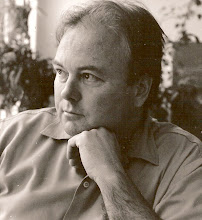
Monday, April 17, 2023

  Lots to report from Lake C. I., but the time's not favorable right now. I am using the JPAY kiosk, and only have ten minutes left. 

I did make another medical trip to Lake Butler RMC in a dog box transport van to see the outside cardiologist, Dr. Salman, to get the results of my echocardiogram and stress test, which came out well, for now. 

This new JPAY/SECURUS email system has glitches, and if you have tried to email me and it didn't go through, look for an email from JPAY that has a new link. 

 I hope you had a happy Easter... no Easter egg hunt here, however. 


All the best--- Charlie

Learning to Forgive


April 16, 2023

A friend asked me about forgiveness. I decided I would explain how I became a better man by putting my life in God's hands. Learning to forgive was a crucial factor on my journey.

Kairos Prison Ministry has offered a three-day Christian renewal to prisoners for over forty years. Some call it a short course in Christianity. About forty "free men" come into the prison and put on a program for forty or so prisoners, a series of talks on several fundamental principles.

Unconditional love. Some of the volunteers are priests, preachers, ministers from various church denominations, while most are goodhearted men who want to share the word of God with deprived prisoners who might never otherwise be exposed to it.

I'm not going to summarize the entire program — I'm sure Mr. Google is better equipped to fulfill that role. Their headquarters are somewhere around Winter Park.

There is a lot of spiritual healing during the weekend, especially involving forgiveness. Many prisoners are crippled by guilt, anger, resentment, hatred toward those who hurt them, betrayed them, testified against them, and abandoned them, any of a dozen transgressions that are burdens that weigh them down. The Friday sessions and Saturday sessions build up to a talk by one of the free men who shares his personal experiences with forgiveness.

There are numerous examples. One that affected me was the comparison that one's bitter hatred is like a fiery hot coal grasped tightly in one's hand. The harder you squeeze it, the more it burns you. The other person is not damaged — you are. The most logical action is to open your hand and fling that hot coal as far as you can throw it. How do you do that?

When I went through Kairos #9 at Union C..I. in May, 1982, they did the exercise differently than they do now, but no matter. It's the personal internal process that matters. "I forgive you." They pass out a bunch of slips of paper, and tell you, "Write down the names of every person who has wronged you, that you hate, hold a grudge for, that harmed you, and forgive them. "I forgive you"— and mean it. Let them go.

They used to pass around a gallon metal can and tell you to put in the slips of paper. When they collected all the names, they would light the paper. The names went straight up in smoke, straight to God, who forgave each and every one of us.

If God can forgive us our major sins, can we not forgive others? Be Christ-like?

I had a lot of names on my list. Perhaps that's why they don't set the papers on fire any more. When I was doing it, I was skeptical, thought it was just another exercise. But when I tossed in those slips and saw them go up in smoke, I felt something. A weight I didn't know I carried lifted off me. I felt clean. I had been holding tightly to that burning hot coal, squeezing it tightly, never even realizing it.

It wasn't over. That slate was clean, but life goes on. I've had numerous opportunities to forgive others who've wronged me. Remind me to tell you about my "friend," Otis, and what he did to earn my forgiveness. Bottom line — forgiveness heals the one who forgives.

You can't go through life pushing around a wheelbarrow full of anger and frustration. Let it go.

I screw up all the time. And I'm not afraid to put myself out there and ask, "God, please forgive me." If God can forgive me, it's only fair that I forgive those who have offended me, in turn.

There's much more to say on this subject, but it has been a long day, and I am tired.

Do you want to see how it works? Think of your worst enemy, the person who has hurt you the most. Picture that person in your mind. Sincerely say, "I forgive you," and mean it.

And God will continue to forgive you.

Charlie

Monday, March 27, 2023

Reflections On Caribbean Literature


When I saw the flyer on the dorm bulletin board announcing the Caribbean Literature class sponsored by the University of Central Florida (UCF) and the Florida Prison Education Project (FPEP), I said to myself, "That's me."

Fifteen students. I sent in my request form that night.

I approached our first class with an open mind and wasn't disappointed. Professor Heather Vazquez quickly lit up the class with her enthusiasm for the course, and the students caught that enthusiasm. A teacher who loves to teach enhances the students’ learning experience, and I became determined to squeeze every bit of knowledge from the class that I could get. College-level classes in prison are rare, and a professor teaching a volunteer program is rarer still.

I have had a special interest in the Caribbean islands and their peoples for a long time. For ten years my family rented a house next to a large orange grove east of Tampa. An orange grove is a great playground for poor country children: football games between the rows, rotten orange fights with neighborhood children, all kinds of snakes, frogs and other critters rousted by the dogs, and all the oranges one could eat.

When I was nine years old and a new Florida resident, a busload of Jamaican workers arrived to pick the ripe fruit. Years later I learned that thousands of Jamaican laborers were brought in every year to harvest Florida's prodigious agricultural crops.

To a nine-year old boy the Jamaicans were fascinating people who spoke with a strange accent. To them, a nine-year old white child must have seemed equally strange. Nevertheless, they immediately accepted my presence. They taught me to pick fruit. Each man carried a pocketknife with a long, slim, razor-sharp blade. They taught me how to properly peel an orange, Jamaican-style. First, you squeeze the orange until the juice is freed, the orange soft. Then peel the orange carefully, in one long curling strand, leaving the white pulp covering the orange. Lastly cut a circular hole at the top to drink from. Voila! An instant orange juice container.

Sometimes a man climbing a tall ladder would suddenly shout some incomprehensible verses loud enough to be heard across the grove. Workers in the distance would answer him with more words, a chorus. He would shout more verses, and the other men would answer him. They would continue until the work song ended, then laugh uproariously.

I count back the years — 64 — I am now 73 — and wistfully realize that those fine gentlemen who took the time to befriend a curious little boy are most likely all dead.

At the University of South Florida I joined the World Affairs Council along with students from 37 countries, several from the islands, and made a number of lasting friendships. I saw Bob Marley and the Wailers perform, and was wowed by the music. Back to the present day, I can still hear the steel drums reverberate inside my head.

I didn't know what Caribbean Literature entailed, but with my 500-page textbook in hand I planned on finding out. When I began reading our textbook and other materials Professor Vazquez provided, I was shocked by how the women islanders lived, endured and withstood horrifying mistreatment. I told my wife, Libby, about my readings, and shared them with her. She was especially affected by an excerpt from Dr. Anna Levi's forthcoming book, "The Nowherians," about sex workers in Trinidad, and we had several discussions during our weekly visits about how those women survived. From the first sentence of the excerpt, the reader is transported to a new level of horror, which is sustained at that plateau with each disclosure in the subsequent sentences. No joy in life, just unspeakable pain.

Libby said something that struck me. "If those poor women in that barracks yard were suddenly transported and set down anywhere in America, there would be an outcry."

How true. But they aren't in America. They are trapped in Trinidad, with little hope for rescue.

Dr. Levi was a guest speaker one week, and if she can be convinced to return one day, I have some questions.

Dr. Kevin Meehan was also a guest speaker, and is coming again this week.

The class gave me an unexpected opportunity to share what we were learning. An officer who passed through our class caught snippets of discussion and later on asked what it was about. I told him. I said the textbook didn't mention my favorite Caribbean poet, Bob Marley.

"Bob Marley!" he said. "I am Jamaican. I love Bob Marley."

I pulled a sheet of paper out of my book. "My wife sent me the words to the last song he wrote before he died."

"Redemption Song," he said.

"Yes." I unfolded the page with the lyrics.

He pointed out a verse. "The most important words," he said. "Emancipate yourselves from mental slavery."

Amen, brother.

Charlie

February 26, 2023

Monday, February 20, 2023

More Trips, Inside and Out

 January, 2023, proved to be an eventful month in prison. I told you about my progress report January 9th, where I found I had accumulated 10,424 days of gain-time. They award gain-time toward the middle of the month, for the previous month, and on January 16th I received 20 more days for December, 2022. 10,444 days.

I mentioned MLK's birthday holiday provided us with a three-day visiting weekend, which Libby and I took full advantage of. At every prison there are always families of ''regulars,'' usually local people who visit their loved ones most weekends, and that remains true here at Lake C. I. Over time relationships develop among the visitors. We make the rounds of the visiting park, greeting our friends, smiling, laughing, complaining, on our way to the canteen line.

Each prison is known and rated by the efficiency and quality of the visiting experience. Lake is known as a fairly laid-back facility, despite the turmoil of construction, as the north end of the compound is demolished for a building project. That contrasts greatly with the last prison we patronized, where many visitors, including small children and elderly, were subjected to two-hour waits in the weather before being allowed in the gate for ''processing.'' After being admitted to the visiting park, they had to deal with surly guards who stared uncomfortably at the visitors.

On Wednesday, January 18th, UCF Professor Heather Vazquez treated our Caribbean Literature class with a guest speaker, author Dr. Anna Levi from Trinidad, a skilled and highly qualified professor. She quickly involved the class in a writing exercise that revealed several already good writers in the group. Dr. Levi has a book coming out this summer, ''The Nowherians,'' which the students agreed they all wanted to read.

On Friday, January 20th, we had a special treat at the Toastmasters Gavel Club meeting in the recently-converted old chow hall/chapel. This camp has shrunken by at least half in population in the past two years, as the north end housing units closed down, and that has affected attendance at this voluntary program. Every few months the Gavel Club sponsors an ''open house,'' where each member invites a guest.

The outside sponsor brought in approved coffee, doughnuts, and cupcakes for a nine o'clock breakfast session that provided a rare opportunity for the attendees. Ten members were called on to make impromptu short talks on topics chosen by a moderator. The group then voted on the best speech. Hopefully, some of the guests will decide to join the Gavel Club.

Saturday and Sunday Libby and I visited once again.
Monday evening, January 23rd, a guard told me I had to go to the infirmary for the night. I knew what that meant. I had an outside medical test scheduled for the next day, and I was required to fast the night before.

The night medical staff, consisting of a nurse and inmate orderly, knew me well and were very polite and attentive. Seven sick inmates of varying medical conditions were housed in the nine-bed infirmary. I knew one, an old friend who was awaiting surgery to repair a bad hernia operation from years before.

The treat of overnighting in the infirmary is sleeping on a thick, soft hospital bed. It seemed like only minutes of restful sleep had elapsed before I was awakened at four a.m. to get ready for my medical trip.

I knew something was different when the transport van turned south on Hwy 27 rather than north toward Lake Butler — RMC. In minutes we were headed east on Interstate 4 toward Orlando. 5:45 a.m., traffic both ways on I-4 was bumper-to-bumper. Soon we were passing through downtown Orlando with tall hotels sprouted like mushrooms on either side of the highway, sights I had never seen during my lengthy imprisonment. Does Hilton own Orlando? Or just most of the hotels?

We were lucky to get through traffic-clogged and over-developed Orlando when we did. For the next two days after my return the local TV news station gleefully reported ad nauseum the tragic fatal crashes and hours-long traffic backups on the same road we had uneventfully traversed Tuesday.

Soon I-4 turned into Interstate 95 North at Daytona Beach, where I had spent many forgettable years at Tomoka C. I. When we passed the big sign for Ormond Beach I thought of my dear first cousin, Betty, retired, scant miles away.

The road signs whipped by in blurs. St. Augustine. Flagler. St. Johns. Jacksonville — 27 miles. How many times had Libby driven this same path home from visiting me? The last time I'd been to Jacksonville had been several years before when I went on a medical trip from Columbia C. I. to Jacksonville Memorial Hospital to have ultrasound treatments for kidney stones. The driver exited I-95 near University Boulevard. Soon we were parked at Jacksonville Cardiac Center, Dr, Waddah Salman.

Tuesday must be prison day at the Jacksonville Cardiac Center. Still burdened with chains, we wended our way past several guards clogging a narrow hallway to a small waiting room. Four other chained-up men waited their turns, men from Sumter, Taylor, Union and FSP. One elderly, wasted, toothless old man in a wheelchair informed us that he had recently had a stroke, and tended to talk too much and repeat himself. We should just tell him to shut up if he did that. Then he told us again. And again.

"Shut up," the man from FSP said.

"Okay."

Nuclear technician, Ms. Libia, came in and explained the procedures for the upcoming stress test we were about to take. They don't use the old-fashioned treadmill anymore. Instead they insert an IV containing liquid radiation into your arm to illuminate your veins and heart, then inject another chemical that causes your heart to race as though you were running on a treadmill. A large machine then takes photos of your heart.

My fellow prisoners must have been junkies in their previous lives in freedom. The technician had a hard time finding veins that weren't collapsed. Mine was easy. My prominent veins had never been tampered with by illicit drugs.

The procedure went well, Ms. Libia said.

Monday, February 6th, the guards woke me up early for another medical trip, this time to RMC for the echocardiogram. The hospital was packed with sick prisoners from at least a dozen prisons. Fortunately for me, few were there for echocardiograms. All went well, the nurse said, six minutes, a sonogram of my beating heart.

Next step, Dr. Salman will evaluate the results, provide a diagnosis, and outline a course of treatment, as necessary. That will be  another RMC trip, most likely.

We got out of Lake Butler by 10:0 a.m., and returned to Lake by one p.m.

On the way back, I enjoyed reading all the billboards — LIVE BABY ALLIGATORS!


Charlie Norman

January, 2023

Saturday, January 28, 2023

SLOW PROGRESS — A Week In The Life


01-12-2023

On Monday, January 9, 2023, I reported to the classification building for my annual progress report. They verify your current emergency contact information in case you die, and ask if you want a transfer. No. There are no good prisons anymore. Job change? No. I am a houseman, light cleaning, no windows, and I don't want to change. My days digging ditches and washing pots are gone. I did find out that my automatic twenty days a month (with good behavior) gain time has accumulated to 10,424 days, or 28.5 years, for what good it does me.


3:00 a.m. Tuesday morning I am awakened by a flashlight beam in my eyes.

"Norman, you wanna go on a medical trip," the guard asked.

"Yes."

A couple of weeks ago I had my annual physical. They finally administered my annual EKG two years late. The computer analyzes your EKG now, and revealed an abnormality. The prison doctor put me down for a consultation with the cardiologist at the Lake Butler Reception and Medical Center (RMC), Dr. Waddah Salman, a very well-respected expert.

Loaded down with enough handcuffs, leg irons, and chains that would embarrass Houdini, two guards loaded me into a Ford transport van for the two-and-a-half drive to RMC in North Florida. At least this van had windows and soft seats, unlike the dog box van they carried me in last April.

My dear wife, Libby, tells me how bad the traffic is when she makes the three-hour drive each way to visit me, but you have to experience it to believe it. Five-thirty a.m. — the Florida Turnpike and I-75 are already backed up. We got off the interstate at Gainesville for the guards to order breakfast for themselves at a Krystal, to be met with bumper-to-bumper traffic on six-lane streets at seven a.m. Huge semi-tractor trailers clogged the traffic arteries. Toyotas, Kias, Fords, Chevys, and every other model vehicle I've only seen on TV filled in the gaps between the Ford F-150s.

Rubbernecking is the optimum word. The world has changed and evolved greatly in the forty-four years I've been cast away in prison. I hastily drank in the sights through the black steel mesh grills covering the windows: McDonald's, Chik-Fil-A, Wendy's, Circle K, Publix, Walmart, and all the other dozens more places that did not exist when I came into prison in 1978.

We made it inside Lake Butler before the eight a.m. count, early, I thought, but when we got inside I was confronted by hallways and benches crammed with sick prisoners from a dozen different prisons waiting to see specialists. Dying men. Several I didn't recognize greeted me.

"Charlie Norman. Remember me?" one said.

I didn't recognize the bald, gaunt man in a wheelchair. I looked at his I.D. card. I remembered him from at least twenty years ago.

"You look different now," I said.

"We're all older than dirt," he said.

He was dying of cancer, maybe a year left, he said. Another had a pacemaker, needed a heart transplant, but the odds of that are about the same as winning the Mega Millions lottery.

The cardiology nurse called my name.

Dr. Salman asked me questions and reviewed my medical records on the computer. He scheduled me for an echocardiogram and a stress test. Another road trip.

We made it back to the institution three hours later.


On Wednesday afternoon I reported to the education classroom in the former old staff dining room at the rear of the kitchen. They are demolishing all the buildings on the north end of the compound, including the former school, preparing to build another mental hospital, and all programs are cramped for space. The University of Central Florida (UCF) in Orlando is sponsoring the Florida Prison Education Project (FPEP), with classes held here at Lake C. I. and Central Florida Reception Center (CFRC).

I completed the first class in 2022, "Principles of Art and Design," and signed up for the newest one, "Caribbean Literature." Wednesday was the first day.

Professor Heather Vazquez greeted the twenty or so men signed up for the course. We crowded into the small classroom and took our seats at single desks. No matter — we are used to being crowded.

The professor is an obviously intelligent and well-spoken person who exudes her love of teaching, volunteering her free time to drive out here in the boonies for the next eight weeks to offer us a college-level education experience. She is also the coordinator of the Florida Prison Education Project, promising future classes if she can recruit enough professors to volunteer their time to teach. She asked if we had any suggestions for future classes. I would like a composition class that compiles our writings in a journal.

The professor and Mr. Jacobson, the education manager here, passed out writing supplies and reading materials, as she gave us an overview of the Caribbean Literature course. Very interesting.

Next week Professor Vazquez is bringing a guest speaker, Anna Levi, an author from Trinidad. She gave us an excerpt from Ms. Levi's book to read for next week. Being isolated and exiled from free society, it is the rare exception to be able to meet and interact with citizens who are not prison security staff. I am looking forward to exercising my brain and learning more, not only about other cultures, but also my own.

Thursday morning a storm front from the west passed through, leaving rain and freeze warnings in its wake. Thirty years ago the prisons passed out sweatshirts and thermal underwear at the onset of cold weather. They stopped that. Now they issue flimsy jackets that barely cut the wind.
For those who have family to send them money, extra warm clothing can be purchased from the canteen quarterly each year. For those without family, shivering ensues.

Friday morning I donned my sweatshirt, thermals, and blue knit cap to go to the weekly Gavel Club program in the chapel, sponsored by Toastmasters International. Three local Toastmasters members from Clermont sponsor our program, volunteering their time. Without them we wouldn't have a program. I first attended Gavel Club meetings in 1980 at Union C. I., aka "The Rock," Florida's oldest, largest, and most dangerous prison. Over 100 men attended the meetings in the visiting park. It was very difficult to find opportunities to speak with so many members. With a much smaller group here, it is easier to get on the agenda to practice speaking.

I live through the interminable weekdays with their incessant counts and ransacking shakedowns, for the Saturdays and Sundays when my dear wife, Libby, visits me. Only sixteen men were counted at noon in the visiting park this past Saturday. Sixteen out of total inmate population of around 560, less than three percent, a bad number for society. The "experts" know that those prisoners who receive regular visits from family and friends have a much better prognosis for success when they are released from prison back to society.

We had three days of visits this past weekend. The Martin Luther King, Jr. holiday gave us an extra day on Monday. Only nine men stood for the noon count. I can't tell you how much those hours spent with Libby contribute to my positive attitude and hopes for the future. We both need that extra time together. I hope to have a new parole hearing in the next few months, and there is much to accomplish. We talk and plan for the future.

My parole release date is still frozen at July 4, 2o17, and our efforts focus on a new parole release plan. We need letters of support from family and friends on my release on parole. We'll discuss this more in the coming weeks.


For over ten years, I have been approved to attend the "Prisoners of Christ" faith-based residential transition program in Jacksonville. "Prisoners of Christ," originally formed by Ken Cooper over thirty years ago, is a highly-respected program supported by some of the most reputable Christian business people in North Florida.

In the recently completed "Creative Writing Workshop” I taught, students are encouraged to keep a daily journal. I send my daily journals by email to Libby, who keeps them. I asked her to share this installment of my past week in prison with family and friends to give you a glimpse of my life in prison.


Realistically, this upcoming year is my last chance for freedom. We have to marshal our resources and put together a new, convincing parole release plan. We still need new letters supporting my parole, we have three right now. April 5th will mark 45 years in prison for a crime I had nothing to do with. We called on the state attorney to make available crime scene evidence for modern DNA testing to prove my innocence, but the new state attorney claims the evidence is lost.

I don't want to die in prison. My health is failing. Still we fight on.

Peace, joy and love to you and yours.

Charles Patrick Norman

January 18, 2023