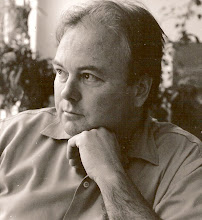
WHILE THE MUSIC PLAYS LET US DANCE
Some things should not be left to chance;
Why should those with youth lay claim to love?
While the music plays let us dance.
We’ve lived and learned from circumstance;
With age should we lose all hope for love?
Some things should not be left to chance.
Across the room you risked a glance;
The angels whispered from above,
While the music plays let us dance.
Romance is not extravagance;
Holding hands is not enough.
Some things should not be left to chance.
Together our lives have substance;
Shallow youth pales in our new love.
While the music plays let us dance.
We will not yearn for past remembrance;
Or store regrets for long-lost love.
Some things should not be left to chance.
While the music plays let us dance.
By Charles Patrick Norman, September 1, 2012
Editor’s note: In his continuing pursuit to develop a basic poetry workshop program, Charlie has been studying different poetic forms. This new piece is a villanelle, a poetic form that appeared in English language poetry in the 19th century from the French models, although the word itself is derived from the Italian, villanelle, and the Latin, villanus.
Characteristics of this form include the use of only two rhyme sounds with the first and third lines of the first stanza as the rhyming refrains. These refrains alternate as the third line in each successive stanza and together form a couplet at the close. A villanelle consists of nineteen lines arranged in five tercets and one concluding quatrain.
Villanelles do not tell a story or establish a conversational tone, but are comparable more to a lyrical dance form accompanied by sung lyrics or an instrumental piece.
The form enjoyed a revival beginning in the 1930’s. In the 1990’s many contemporary poets composed villanelles, often varying the form in innovative ways. One of the more well-known villanelles was written by the Welsh poet, Dylan Thomas, and was entitled, “Do Not Go Gentle Into That Good Night.”
Charlie’s efforts at improvement are ongoing, and he would welcome your comments and criticisms.
With gratitude,
Libby
Sunday, September 2, 2012


Monday, August 20, 2012
DAY FIVE OF “THE MAIL RESTRICTION"
TUESDAY, JULY 10, 2012
Although I can’t mail any letters until this illegal mail restriction is lifted that doesn’t mean I can’t write, so this latest “prison diary” project, documenting my inability to send out letters to my family and friends, serves as a good safety valve to release the incredible tensions and channel my energies in a positive direction, rather than lapse into a depressed state.
Another ironic instance: I’ve been meaning to write about the creative writing class at Wakulla Annex. I taught short story writing in the first one, from November, 2011, to January, 2012. I was dissatisfied with the curriculum they’d set up, put together by non-writers without any English study credentials or writing chops, not to mention they were devoid of effective teaching experience, and had never had anything published.
Despite all that, and a lack of materials (PEN was going to help us with materials and supplies in the next class, before I was transferred to Siberia, Florida), we had 169 men on the creative writing class waiting list. I couldn’t go anywhere without someone asking, “Can I get in the next class?”
I began teaching poetry classes in prison in 1995 at Sumter C. I. in conjunction with the “R.I.T.E. Program” teacher training run by Sister Ann Raymond Wood of the Sisters of Saint Joseph.
Everyone was amazed at the response. Hard core convicts focused and struggled to find the right words for their haikus. I published a two-page sheet of twenty-four haikus written by twenty-three convicted felons and one Catholic nun. The question was, which one was written by the nun?
No one knew. They couldn’t tell the difference between murderers, rapists, robbers, burglars, thieves, and a nun. That drew some interesting observations from my literary mentors, Fielding Dawson and James J. Kilpatrick, who publicized and shared that fact. That was then. Back to Wakulla “faith-based” programs.
I wasn’t real happy with how they were managing the creative writing class, something that was in great demand and that had a powerful rehabilitative effect on prisoners, not only improving their ability to write and express themselves, but also developing “critical thinking skills,” something most prisoners lack. Although the prison, Wakulla Annex, was classified as a “faith-and-character-based” institution, the “business” classes and the creative writing classes were separate from the religious-oriented chapel programs, and held in the education building.
There is much more to “creative writing” than writing short stories. I am of the belief that students should be exposed to all aspects of creative writing, non-fiction as well as fiction, essays, journals, diaries, poetry and more. There are many talented people in prison who aren’t aware of their talents until they are mined and revealed to the light.
Poetry is one of those talents. I had discovered my own talent and desire to write poetry through the encouragement of a great teacher, Mrs. Vivian Barnard, in the 1980’s, at Zephyrhills, and I felt it was part of my personal mission to help others discover their hidden abilities. Over the years we had poetry classes, poetry readings of both prisoners’ works and classic poems from the masters, all of which were well attended. And there was never any talk of poetry not being “manly,” or only for “sissies.” Some of the baddest, toughest prisoners would come to me and say, “Charlie, I’m trying to write this poem for my mom. Would you read it, and tell me what you think?” And I would.
With all that background, at Wakulla I began asking prisoners if they would be interested in attending a poetry workshop. The answers were resoundingly positive. Through word-of-mouth only, in a month over one hundred men had signed up on a waiting list.
I contacted Hettie Jones, a fine lady and the most talented poet I know, who has taught poetry to women prisoners in New York for many years, for guidance, not only for advice on a curriculum, but also for philosophical insight so I could present a proposal to justify such a class. She recommended textbooks and shared her experiences of how poetry helped prisoners become rehabilitated and lead law-abiding lives upon their release. Poetry classes have been a highly cost-effective means of reducing recidivism. So what’s not to like about teaching poetry to prisoners? Nothing. It is a win-win for everyone ─ taxpayers and prisoners.
I put together an eight-week introductory poetry workshop, at no cost to the state. Then I got punitively transferred again, on March 28, 2012, here to Okaloosa, Florida. Siberia. So here we are. We are in an intellectual wasteland inhabited by clueless people who think the song, “Summertime,” (as in …”and the livin’ is easy…”), is a poem an inmate wrote and is trying to sell, and has obviously never heard of “Porgy and Bess,” or Broadway, for that matter, an whose only knowledge of New York is “that place where them damned Yankees” come from.
Every day men approach me and ask, “Are you gonna teach a writing class here?” I shake my head no, as much as they need such a class. The field is full and ripe, yet there are no pickers allowed to work. It would be like having Bible study in Hell. The Devil is against it.
In the meantime I plumb the depths of my own soul and reveal thoughts and feelings I didn’t realize were there. I put them on paper with the hope that my friend, Hettie, will read one day and say, “This one I like.” It will not matter that some small-minded, hateful person doesn’t like what I write. George Washington, Thomas Jefferson, James Madison, and some others said I could write, and I will.
Charlie
Although I can’t mail any letters until this illegal mail restriction is lifted that doesn’t mean I can’t write, so this latest “prison diary” project, documenting my inability to send out letters to my family and friends, serves as a good safety valve to release the incredible tensions and channel my energies in a positive direction, rather than lapse into a depressed state.
Another ironic instance: I’ve been meaning to write about the creative writing class at Wakulla Annex. I taught short story writing in the first one, from November, 2011, to January, 2012. I was dissatisfied with the curriculum they’d set up, put together by non-writers without any English study credentials or writing chops, not to mention they were devoid of effective teaching experience, and had never had anything published.
Despite all that, and a lack of materials (PEN was going to help us with materials and supplies in the next class, before I was transferred to Siberia, Florida), we had 169 men on the creative writing class waiting list. I couldn’t go anywhere without someone asking, “Can I get in the next class?”
I began teaching poetry classes in prison in 1995 at Sumter C. I. in conjunction with the “R.I.T.E. Program” teacher training run by Sister Ann Raymond Wood of the Sisters of Saint Joseph.
Everyone was amazed at the response. Hard core convicts focused and struggled to find the right words for their haikus. I published a two-page sheet of twenty-four haikus written by twenty-three convicted felons and one Catholic nun. The question was, which one was written by the nun?
No one knew. They couldn’t tell the difference between murderers, rapists, robbers, burglars, thieves, and a nun. That drew some interesting observations from my literary mentors, Fielding Dawson and James J. Kilpatrick, who publicized and shared that fact. That was then. Back to Wakulla “faith-based” programs.
I wasn’t real happy with how they were managing the creative writing class, something that was in great demand and that had a powerful rehabilitative effect on prisoners, not only improving their ability to write and express themselves, but also developing “critical thinking skills,” something most prisoners lack. Although the prison, Wakulla Annex, was classified as a “faith-and-character-based” institution, the “business” classes and the creative writing classes were separate from the religious-oriented chapel programs, and held in the education building.
There is much more to “creative writing” than writing short stories. I am of the belief that students should be exposed to all aspects of creative writing, non-fiction as well as fiction, essays, journals, diaries, poetry and more. There are many talented people in prison who aren’t aware of their talents until they are mined and revealed to the light.
Poetry is one of those talents. I had discovered my own talent and desire to write poetry through the encouragement of a great teacher, Mrs. Vivian Barnard, in the 1980’s, at Zephyrhills, and I felt it was part of my personal mission to help others discover their hidden abilities. Over the years we had poetry classes, poetry readings of both prisoners’ works and classic poems from the masters, all of which were well attended. And there was never any talk of poetry not being “manly,” or only for “sissies.” Some of the baddest, toughest prisoners would come to me and say, “Charlie, I’m trying to write this poem for my mom. Would you read it, and tell me what you think?” And I would.
With all that background, at Wakulla I began asking prisoners if they would be interested in attending a poetry workshop. The answers were resoundingly positive. Through word-of-mouth only, in a month over one hundred men had signed up on a waiting list.
I contacted Hettie Jones, a fine lady and the most talented poet I know, who has taught poetry to women prisoners in New York for many years, for guidance, not only for advice on a curriculum, but also for philosophical insight so I could present a proposal to justify such a class. She recommended textbooks and shared her experiences of how poetry helped prisoners become rehabilitated and lead law-abiding lives upon their release. Poetry classes have been a highly cost-effective means of reducing recidivism. So what’s not to like about teaching poetry to prisoners? Nothing. It is a win-win for everyone ─ taxpayers and prisoners.
I put together an eight-week introductory poetry workshop, at no cost to the state. Then I got punitively transferred again, on March 28, 2012, here to Okaloosa, Florida. Siberia. So here we are. We are in an intellectual wasteland inhabited by clueless people who think the song, “Summertime,” (as in …”and the livin’ is easy…”), is a poem an inmate wrote and is trying to sell, and has obviously never heard of “Porgy and Bess,” or Broadway, for that matter, an whose only knowledge of New York is “that place where them damned Yankees” come from.
Every day men approach me and ask, “Are you gonna teach a writing class here?” I shake my head no, as much as they need such a class. The field is full and ripe, yet there are no pickers allowed to work. It would be like having Bible study in Hell. The Devil is against it.
In the meantime I plumb the depths of my own soul and reveal thoughts and feelings I didn’t realize were there. I put them on paper with the hope that my friend, Hettie, will read one day and say, “This one I like.” It will not matter that some small-minded, hateful person doesn’t like what I write. George Washington, Thomas Jefferson, James Madison, and some others said I could write, and I will.
Charlie
Thursday, August 16, 2012
DAY FOUR OF “THE MAIL RESTRICTION”
MONDAY, JULY 9, 2012
Today, I mailed 38 pages of legal research and documents to my lawyer, Bill Sheppard, in Jacksonville, First Amendment cases from the federal courts and U. S. Supreme Court. In May, I sent him eight pages of the same research through Libby, so she could type it and send me copies, too, but that was one of the first four letters stolen by the mail room woman. I can understand why she stole it, trashed it, whatever she did with it besides mailing it, but I can’t excuse it.
Targeting all my mail because I filed complaints against her for targeting my mail, when she read all those high court rulings about the mail rights of prisoners, she must have figured that if she destroyed the research, it would stop the federal civil rights lawsuit. It just slowed us down somewhat, but made my case stronger.
The illegal acts continue. The state law requires them to process our incoming and outgoing mail within 48 hours of receipt, or file a Form DC2-521 explaining why. Tonight, Libby got a letter I mailed on June 28, 2012 ─ eleven days! But the problem is the letter was postmarked July 6th. That means the mail room held my letter eight days before sending it to the post office, six days beyond the legal limit. It only took from Friday to Monday to get to Jacksonville. I can live with that, but not weeks, and even months, or never. So I have to write that up as a formal complaint, and engender more wrath.
The good news is that two of my latest poems were in the letter, and she let them through. All the other poems I sent out the past couple of months were eventually returned with post-it notes stating, “inmates can not[sic] start or conduct business while incarcerated,” refused to be mailed by the mail room. What is with this person and poetry?
Charlie
Today, I mailed 38 pages of legal research and documents to my lawyer, Bill Sheppard, in Jacksonville, First Amendment cases from the federal courts and U. S. Supreme Court. In May, I sent him eight pages of the same research through Libby, so she could type it and send me copies, too, but that was one of the first four letters stolen by the mail room woman. I can understand why she stole it, trashed it, whatever she did with it besides mailing it, but I can’t excuse it.
Targeting all my mail because I filed complaints against her for targeting my mail, when she read all those high court rulings about the mail rights of prisoners, she must have figured that if she destroyed the research, it would stop the federal civil rights lawsuit. It just slowed us down somewhat, but made my case stronger.
The illegal acts continue. The state law requires them to process our incoming and outgoing mail within 48 hours of receipt, or file a Form DC2-521 explaining why. Tonight, Libby got a letter I mailed on June 28, 2012 ─ eleven days! But the problem is the letter was postmarked July 6th. That means the mail room held my letter eight days before sending it to the post office, six days beyond the legal limit. It only took from Friday to Monday to get to Jacksonville. I can live with that, but not weeks, and even months, or never. So I have to write that up as a formal complaint, and engender more wrath.
The good news is that two of my latest poems were in the letter, and she let them through. All the other poems I sent out the past couple of months were eventually returned with post-it notes stating, “inmates can not[sic] start or conduct business while incarcerated,” refused to be mailed by the mail room. What is with this person and poetry?
Charlie
Saturday, August 11, 2012
THE MAIL RESTRICTION DIARY - PART I
SATURDAY, JULY 7, 2012
DAY TWO OF “THE MAIL RESTRICTION”
“DO I DARE DISTURB THE UNIVERSE?”
Perhaps you will find it as ironic as I did. After I was sentenced to “90 days mail restriction” on Thursday, July 5th, I stopped in the library to pick up a couple of grievance forms to appeal the illegal sentence. (For what good it does ─ DOC motto: “when we’re right, we’re right, and when we’re wrong, we’re right.”)
Turning t walk out, I paused to look more closely at a colorful poster taped to the wall. In large letters it asked, “Do I Dare Disturb the Universe?” In small print it noted, “from ‘The Love Song of J. Alfred Prufrock,’ by T.S. Eliot.”
A poem! Or, at least, an excerpt from a famous poem, I recalled. The poster proclaimed that April, 2009, was National Poetry Month, and it listed the Academy of American Poets, at “Poets.org,” the New York Times, and other sponsors of National Poetry Month. Could this beacon be an encouragement for prisoners to write poems?
And I thought, “Do I Dare Disturb the Universe?,” if only for a moment? I answered, “Yes.” Would J. Alfred Prufrock and T. S. Eliot be proud of me, for enduring punishment for the sake of art and the First Amendment? I would like to think so.
SUNDAY, JULY 8, 2012
DAY THREE OF “THE MAIL RESTRICTION”
At least they haven’t cut off my phone privileges yet! (knock on wood). Today is Sunday, and I spent several hours writing down legal case citations on the First Amendment as applied to prisoners, learning several new facts. The main point is that the prison officials are dead wrong for punishing me for writing a poem, and all these petty rules are unconstitutional. Florida is caught in some sort of time warp or wormhole, years behind the rest of America. Are they oblivious to the “Law of the Land,” or just don’t care to do the right thing?
When public officials who have sworn an oath to uphold the Constitution abuse their authority, lie, and make false statements on official state documents strictly to strike back at a prisoner as a reprisal, they undermine the integrity of their fellow public servants, losing what little respect they might have had from their charges. How can society expect thousands of prisoners to emerge from prison and lead law-abiding lives when their captors have posed as such poor role models? It can’t.
I was discussing that same thing on the phone with a friend when I thought again how impossible it sometimes seems to maintain a clean record when we are constantly subjected to arbitrary and capricious enforcement of petty and illogical rules by hostile, miserable people who bring their personal problems to work with them and vent their frustrations on us. Sadistic roots run deep.
I used the example of Jesus and Paul the Apostle sharing a cell together in prison, and how much trouble they could get into if they were targeted by a typical bad guard:
PAUL: Jesus, I wrote a letter to the Philippians, and the mailroom sent it back.
JESUS: Why?
PAUL: They said it was conducting a business and soliciting donations. They’re gonna write me a D.R. What if they read Corinthians?
JESUS: That’s a bummer, man. Did I tell you what they did to me today?
PAUL: No, what’d they do?
JESUS: This guy on the rec field had a seizure, fell out, and I laid hands on him.
PAUL: Did he have a demon?
JESUS: Nah, it was straight epilepsy, but that sergeant who hates us flipped out, said he was going to write me a “walking D.R.” for unauthorized physical contact. What’s a “walking D.R.,” Paul?
PAUL: Um…I think that means you get to stay out of lockup and walk around until the D.R. hearing next week.
JESUS: Man, how many walking D.R.’s have we gotten this week?
PAUL: I don’t know. We need to count them up. There’s that one where we were praying, speaking in tongues, and that young guard wrote us up for “violation of count procedures,” talking during count.
JESUS: And we both got D.R.’s for not shaving our beards, and not having a shaving pass, or getting haircuts.
PAUL: How do you get a shaving pass?
JESUS: I don’t know. I can’t understand why they wrote me up for turning water into wine in the chowhall at lunch.
PAUL: Let me read the paperwork.
JESUS: Here it is.
PAUL: “Possession of alcoholic beverages.” That’s not good. It was good wine, though. It went well with the soy patty.
JESUS: Yeah, but what about when I took that biscuit out of the chowhall, broke bread on the rec field, and fed the whole compound? The portions on the tray were so small, everyone was hungry.
PAUL: I don’t know. I think it was the six baskets of leftover bread and hot dogs they found. They wrote you up for stealing food out of the kitchen.
JESUS: But I wasn’t stealing! My Father gave it to us!
PAUL: They don’t care, Jesus. What about this one the guard wrote on me? Verbal disrespect!
JESUS: How did that go down, Paul?
PAUL: I told him we were all prisoners of sin, and he got very angry, said he hated prisoners, and I insulted him, he wasn’t a prisoner.
JESUS: Is that all? That doesn’t seem very serious.
PAUL: It wasn’t until he told lies to the sergeant, said I cussed him, calling him dirty names.
JESUS: That’s not very nice. What do you think we should do?
PAUL: (grinning mischievously) When they lock everyone in their cells tonight, how about if we make all the doors pop open, and the fences fall down. That ought to confuse them.
JESUS: Sounds like a plan, Paul, but we should make sure all the guards fall into a deep sleep first. When they wake up, the prison will be empty.
PAUL: But some of these guys are dangerous. Do you want to just set them free?
JESUS: Oh, no! We will heal them all first, make them new men.
PAUL: I like it!
JESUS: And we won’t have to worry about all those D.R.’s.
PAUL: Have you noticed, Jesus, how these prison folks are just like the Romans were two thousand years ago?
JESUS: People never learn, Paul, you know that, until they are washed clean of their sins.
PAUL: So, you wanna go down to the showers and baptize some of the guys?
JESUS: Excellent idea, Paul. We’ll get an early start.
PAUL: I wonder what kind of D.R.’s they’ll write us up for that?
JESUS: It doesn’t matter.
THE END
DAY TWO OF “THE MAIL RESTRICTION”
“DO I DARE DISTURB THE UNIVERSE?”
Perhaps you will find it as ironic as I did. After I was sentenced to “90 days mail restriction” on Thursday, July 5th, I stopped in the library to pick up a couple of grievance forms to appeal the illegal sentence. (For what good it does ─ DOC motto: “when we’re right, we’re right, and when we’re wrong, we’re right.”)
Turning t walk out, I paused to look more closely at a colorful poster taped to the wall. In large letters it asked, “Do I Dare Disturb the Universe?” In small print it noted, “from ‘The Love Song of J. Alfred Prufrock,’ by T.S. Eliot.”
A poem! Or, at least, an excerpt from a famous poem, I recalled. The poster proclaimed that April, 2009, was National Poetry Month, and it listed the Academy of American Poets, at “Poets.org,” the New York Times, and other sponsors of National Poetry Month. Could this beacon be an encouragement for prisoners to write poems?
And I thought, “Do I Dare Disturb the Universe?,” if only for a moment? I answered, “Yes.” Would J. Alfred Prufrock and T. S. Eliot be proud of me, for enduring punishment for the sake of art and the First Amendment? I would like to think so.
SUNDAY, JULY 8, 2012
DAY THREE OF “THE MAIL RESTRICTION”
At least they haven’t cut off my phone privileges yet! (knock on wood). Today is Sunday, and I spent several hours writing down legal case citations on the First Amendment as applied to prisoners, learning several new facts. The main point is that the prison officials are dead wrong for punishing me for writing a poem, and all these petty rules are unconstitutional. Florida is caught in some sort of time warp or wormhole, years behind the rest of America. Are they oblivious to the “Law of the Land,” or just don’t care to do the right thing?
When public officials who have sworn an oath to uphold the Constitution abuse their authority, lie, and make false statements on official state documents strictly to strike back at a prisoner as a reprisal, they undermine the integrity of their fellow public servants, losing what little respect they might have had from their charges. How can society expect thousands of prisoners to emerge from prison and lead law-abiding lives when their captors have posed as such poor role models? It can’t.
I was discussing that same thing on the phone with a friend when I thought again how impossible it sometimes seems to maintain a clean record when we are constantly subjected to arbitrary and capricious enforcement of petty and illogical rules by hostile, miserable people who bring their personal problems to work with them and vent their frustrations on us. Sadistic roots run deep.
I used the example of Jesus and Paul the Apostle sharing a cell together in prison, and how much trouble they could get into if they were targeted by a typical bad guard:
PAUL: Jesus, I wrote a letter to the Philippians, and the mailroom sent it back.
JESUS: Why?
PAUL: They said it was conducting a business and soliciting donations. They’re gonna write me a D.R. What if they read Corinthians?
JESUS: That’s a bummer, man. Did I tell you what they did to me today?
PAUL: No, what’d they do?
JESUS: This guy on the rec field had a seizure, fell out, and I laid hands on him.
PAUL: Did he have a demon?
JESUS: Nah, it was straight epilepsy, but that sergeant who hates us flipped out, said he was going to write me a “walking D.R.” for unauthorized physical contact. What’s a “walking D.R.,” Paul?
PAUL: Um…I think that means you get to stay out of lockup and walk around until the D.R. hearing next week.
JESUS: Man, how many walking D.R.’s have we gotten this week?
PAUL: I don’t know. We need to count them up. There’s that one where we were praying, speaking in tongues, and that young guard wrote us up for “violation of count procedures,” talking during count.
JESUS: And we both got D.R.’s for not shaving our beards, and not having a shaving pass, or getting haircuts.
PAUL: How do you get a shaving pass?
JESUS: I don’t know. I can’t understand why they wrote me up for turning water into wine in the chowhall at lunch.
PAUL: Let me read the paperwork.
JESUS: Here it is.
PAUL: “Possession of alcoholic beverages.” That’s not good. It was good wine, though. It went well with the soy patty.
JESUS: Yeah, but what about when I took that biscuit out of the chowhall, broke bread on the rec field, and fed the whole compound? The portions on the tray were so small, everyone was hungry.
PAUL: I don’t know. I think it was the six baskets of leftover bread and hot dogs they found. They wrote you up for stealing food out of the kitchen.
JESUS: But I wasn’t stealing! My Father gave it to us!
PAUL: They don’t care, Jesus. What about this one the guard wrote on me? Verbal disrespect!
JESUS: How did that go down, Paul?
PAUL: I told him we were all prisoners of sin, and he got very angry, said he hated prisoners, and I insulted him, he wasn’t a prisoner.
JESUS: Is that all? That doesn’t seem very serious.
PAUL: It wasn’t until he told lies to the sergeant, said I cussed him, calling him dirty names.
JESUS: That’s not very nice. What do you think we should do?
PAUL: (grinning mischievously) When they lock everyone in their cells tonight, how about if we make all the doors pop open, and the fences fall down. That ought to confuse them.
JESUS: Sounds like a plan, Paul, but we should make sure all the guards fall into a deep sleep first. When they wake up, the prison will be empty.
PAUL: But some of these guys are dangerous. Do you want to just set them free?
JESUS: Oh, no! We will heal them all first, make them new men.
PAUL: I like it!
JESUS: And we won’t have to worry about all those D.R.’s.
PAUL: Have you noticed, Jesus, how these prison folks are just like the Romans were two thousand years ago?
JESUS: People never learn, Paul, you know that, until they are washed clean of their sins.
PAUL: So, you wanna go down to the showers and baptize some of the guys?
JESUS: Excellent idea, Paul. We’ll get an early start.
PAUL: I wonder what kind of D.R.’s they’ll write us up for that?
JESUS: It doesn’t matter.
THE END
Sunday, August 5, 2012
JUST US
Dateline: August 5, 2012
Editors note: Here is an original from Charlie -
it's a new form for him that he calls "Exercises in Linguistic Gymnastics."
Since he can only see bits and pieces of The Summer Olympics on TV,
this is his way of joining in the spirit.
I think he deserves the gold; what do you think?
We hope it brings a smile to you.
JUST US
Among us the cactus colossus,
Arose the question, can there be justice,
Or as Oedipus remarked on Olympus,
Is it just us?
Brutus and Columbus couldn’t reach a consensus,
So they brought in Cassius, the discus emeritus,
Rubbed his body with eucalyptus, some mucus,
And asked him to read the papyrus opus onus.
The bird he flipped us gave Pegasus tetanus,
But it could have been worse, like syphilis sanctus.
Icarus landed with a hibiscus of surplus humus
Rather humorous, with Venus versus Ursus,
Two out of three falls, refereed by the Walrus.
The habeas corpus took Cyrus the Incubus
A lovely dianthus picked by Narcissus.
Too bad the fungus spread to Tacitus,
When the noise abated
We agreed it was just us.
Charlie
Editors note: Here is an original from Charlie -
it's a new form for him that he calls "Exercises in Linguistic Gymnastics."
Since he can only see bits and pieces of The Summer Olympics on TV,
this is his way of joining in the spirit.
I think he deserves the gold; what do you think?
We hope it brings a smile to you.
JUST US
Among us the cactus colossus,
Arose the question, can there be justice,
Or as Oedipus remarked on Olympus,
Is it just us?
Brutus and Columbus couldn’t reach a consensus,
So they brought in Cassius, the discus emeritus,
Rubbed his body with eucalyptus, some mucus,
And asked him to read the papyrus opus onus.
The bird he flipped us gave Pegasus tetanus,
But it could have been worse, like syphilis sanctus.
Icarus landed with a hibiscus of surplus humus
Rather humorous, with Venus versus Ursus,
Two out of three falls, refereed by the Walrus.
The habeas corpus took Cyrus the Incubus
A lovely dianthus picked by Narcissus.
Too bad the fungus spread to Tacitus,
When the noise abated
We agreed it was just us.
Charlie
Saturday, July 21, 2012
THE VIEW FROM WITHIN
dateline: July 21, 2012
Early morning
I wake to the songs
of birds outside
my small window.
To the east
Blue clouds turn pink,
the sky brightens
with the coming dawn.
From a storm drain
a young cat creeps,
feral, velvet black, white feet,
fixated on the singing bird above.
Florida's true orange,
the sun, bursts forth
above the distant tree line,
a symphony of light.
Clear beams illumine
cropped green fields beyond
And rouse bees from sleep
to tend the clover.
Such pastoral calm
is blemished solely by
the grumbles of gun trucks
Securing the prison within.
Charlie
Sunday, July 8, 2012
JULY 4TH
Dateline: July 8, 2012
“Norman, Stop Writing!”
“I stand in a steel-barred, and concrete room, my hands tightly cuffed behind my back, waiting for a hostile and profane officer in a tiny office to receive instructions over the telephone whether or not to lock me up in solitary confinement for writing a poem. Everyone’s a critic! If other poets risked 30 days in lockup every time they wrote a poem, there would be far less poetry written in America. It is the day after July 4th.”
EDITOR’S NOTE: Actually, Charlie received 90 days mail restriction for his poem, “How Should I Look?” That means he cannot send a letter to anyone, not even his mother, until October 12, 2012. This is a blatant U. S. Constitution First Amendment violation by the prison officials, since the U. S. Supreme Court has ruled that prisoners have the constitutional right not only to write, but also to correspond with people in the outside world. Charlie is appealing that illegal sentence.
If you disagree with gagging a prisoner and denying this award-winning writer his chance to express himself, you can help by writing your own letter to the Florida Department of Corrections’ leader expressing your disapproval, referencing Charles Norman, #881834. That address is:
Ken Tucker
Secretary
Florida Department of Corrections
501 South Calhoun Street
Tallahassee, FL 32399-2500
We will keep you posted. Thanks for supporting the First Amendment.
Charlie
“Norman, Stop Writing!”
“I stand in a steel-barred, and concrete room, my hands tightly cuffed behind my back, waiting for a hostile and profane officer in a tiny office to receive instructions over the telephone whether or not to lock me up in solitary confinement for writing a poem. Everyone’s a critic! If other poets risked 30 days in lockup every time they wrote a poem, there would be far less poetry written in America. It is the day after July 4th.”
EDITOR’S NOTE: Actually, Charlie received 90 days mail restriction for his poem, “How Should I Look?” That means he cannot send a letter to anyone, not even his mother, until October 12, 2012. This is a blatant U. S. Constitution First Amendment violation by the prison officials, since the U. S. Supreme Court has ruled that prisoners have the constitutional right not only to write, but also to correspond with people in the outside world. Charlie is appealing that illegal sentence.
If you disagree with gagging a prisoner and denying this award-winning writer his chance to express himself, you can help by writing your own letter to the Florida Department of Corrections’ leader expressing your disapproval, referencing Charles Norman, #881834. That address is:
Ken Tucker
Secretary
Florida Department of Corrections
501 South Calhoun Street
Tallahassee, FL 32399-2500
We will keep you posted. Thanks for supporting the First Amendment.
Charlie
Subscribe to:
Posts (Atom)