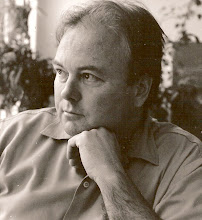
November 12, 2020
In March, shortly before the virus struck,
shutting down the country, my old friends, Jack ''Murf the Surf'' Murphy and
Bernie DeCastro, arranged a conference call in the Chaplain's Office to talk to
me about jump starting my ongoing parole efforts. Jack had recently met with
our mutual friend, retired State Senator John Grant, of Tampa, who pledged his
continued support. He and Bernie wanted me to brief them on where I stood with
the parole commissioners before they went to Tallahassee. We had a great talk.
Much happened over the next few months. The virus hit hard. My mother's
brother, Jim David Walker, passed away in Texas. My mother, Lucille Walker
Norman, fell and broke her hip, eventually leading to her death. My mother's
surviving first cousin, Lethea Myles, passed away. I recovered from the
Covid-19 virus. Family visits were shut down in prisons across Florida for
seven months.
I heard nothing from Murf or Bernie. Murf never answered texts or emails, and
Bernie's emails were returned. We reached out to Senator Grant, who told us
Murf had died September 12, five days before my mother's passing. Then we
discovered that Bernie had died in April.
We'd never heard a word from the Florida media, which was strange, considering
Jack's notoriety from the infamous jewel heist he had participated in in the
1960's, the movie, and his prison ministry career after he was released from
prison in November, 1984, (not 1986, as most media incorrectly cite). A Google
search turned up obituaries that mostly focused on the thefts of the Star of
India, the Delong Ruby, and other priceless jewels, but said little about the
man I knew well for forty years.
For four years before he was freed, I heard every Jack Murphy story so many
times I could recite them. Now that he is gone, perhaps I will. For now, I'll
tell you a prison story few people know.
Murf spent most of the money he once had, and supported himself in prison
selling an occasional watercolor painting. As a prison celebrity, he became
expert at fending off hostile comments from a few prisoners and guards who
sought to provoke him.
One day a particularly nasty guard approached him outside his dorm.
''Murphy,'' he said, ''You walk around like a rich bigshot, but you're just
another fake. You might 'a stole millions of dollars, but I checked your inmate
bank account, and you ain't got shit now.''
Jack, like most people who've done hard prison time, was expert at hiding his
emotions. He never let on to the guard that his comments had affected him, but
they had. As we walked away, Jack mumbled under his breath, already scheming
how to get back at the nasty guard.
Murf may not have had much money of his own, but he still had some wealthy
friends. During his shadow career as a jewel thief, he had made more than one
fence wealthy selling the valuables he had stolen from the rich. No one ever
labelled Murf as a Robin Hood, but he viewed himself that way, relieving the
unjust of their own ill-gotten gains.
Jack called a particularly successful friend in Miami who would always be
grateful that Jack had never revealed his identity after his arrest. He asked
the man for a favor. Of course, anything. He asked his friend to loan him
$10,000 for a few weeks, to send a cashier's check to his inmate trust fund
account, he wanted to prove a point.
''Jack, if you need the money, keep it,'' his friend said.
Jack said no, thanks anyway.
A short time later, Jack got a receipt showing he had a $10,000 deposit to his
inmate account.
If you want to send money from your prison account to someone in the free
world, there is a form to be filled out, included with a letter in a stamped
envelope. The letter and form then goes to the business office, where a check
is issued and mailed. Jack filled out the form and a letter to his girlfriend,
Kitten, in Gainesville. In this case Colonel Jackson got the letter first. He
summoned Jack to his office.
''Murphy, what stunt are you pulling? ‘Please deposit this check in my secret
bank account in Yeehaw Junction.' How'd you get a secret bank account anyway?''
'' I can't tell you, Colonel, it wouldn't be a secret,'' he said.
Soon everyone had heard about the ten grand.
Of course, there was no secret bank account in Yeehaw Junction. There wasn't
even a bank. Jack had never been there, but he'd heard the name and liked it.
The last time I'd been through Yeehaw Junction, all it had was a Stuckey's and
a gas station.
Years later, Jack sent me a photo of him standing in front of a green highway
sign, ''Yeehaw Junction.'' On the back he scribbled, '' Going to the bank.'' No
one knew the inside joke but us.
In ''LIFE IN PRISON — A PHOTO EXHIBIT,” there are a number of photos of Jack
and me. I've asked Libby to include six pages of those photos in this brief
memoir. Perhaps we'll share more in future memoirs.
Jack Murphy was 83 years old.
Charles Patrick Norman
LIFE IN PRISON — A Photo Exhibit
1978 — 2015
Union Correctional Institution 1981

This is a rare photo of GOLAB prisoners with outside supporters at the December, 1981, GOLAB Growth Community Christmas Party, held in the Union C.I. visiting park. Charles Norman stands at center, with attorney, Delia (Dedi) Anderson to his left. University of Florida Professor John (Jack) Detweiler and his wife, Pat, stand behind Charles and Dedi. Jack “Murf the Surf” Murphy is at far left, dressed in a T-shirt and prison cap, three years before his release on parole. Rick Strassner, to Murf’s left, worked in GOLAB at Florida State Prison (FSP) and Union C.I. for years, until his release.
Marjorie Spence , third from left, was the GOLAB state director. Terry, next to Margie, wearing the red-striped top, had been a GOLAB instructor at Lowell Women’s Prison prior to her release. Pat M., second from right, wearing a white blouse, had been released from Lowell that same day, into Margie’s custody, to the Gainesville Women’s Work Release Center, arriving at Union C.I. for the GOLAB Christmas party hours later.
The legendary brick steam plant tower can be seen behind Charles’ assistant, Jim Vick. Long-gone now, for decades the steam whistle echoed across Union and Bradford Counties three times a day, morning, noon, and night
LIFE IN PRISON — A Photo Exhibit
1978 — 2015
Zephyrhills Correctional Institution 1983 — 1987

November, 1984
Charles in the back, with sunglasses; Jack Murphy is on the right; friends Gary Toth, left, and Juan Acebo, center front. All the men in this photo were released and have been free for decades;
except Charles.
This area was the result of a “Jaycees” beautification effort, a fish pond and stone waterfall, a wood bridge and tropical plants, all built by prisoners. This area became the backdrop for the Jaycee Photo Project on Saturday and Sunday afternoons. Sadly, the Jaycee pond and wooden bridge are gone now, eliminated by some later, less enlightened officials. Prison officials no longer allow group photos of prisoners.
LIFE IN PRISON — A Photo Exhibit
1978 — 2015
Zephyrhills Correctional Institution 1983 — 1987
A number of photos in this exhibit include Jack “Murf The Surf” Murphy with Charles. Charles and Jack worked together for years, beginning with GOLAB and KAIROS at Union C.I., and later at Zephyrhills C.I.
Having been freed over 30 years ago, Jack Murphy continues to lobby for Charles’ release.

November, 1984
Charles, left, the week before Jack Murphy, right, was released on parole, standing in front of the horticulture area where Charles was allowed to raise thousands of flowers.
Charles and Jack posed for this photo at Zephyrhills C.I. wearing T-shirts they had silk-screen printed with the “Sonshine Adventure ‘84” logo. They made over 900 T-shirts. Over 200 Christian volunteers from churches in Orlando, Lakeland, Dade City, Tampa, and Clearwater attended, as well as divinity students from Trinity College and Southeastern College.
In his last months in prison, Murf was inspired to work with the flowers, getting his mind right for freedom. As a result of his efforts beautifying some areas around the chapel, the warden reduced Murf’s custody and put him “outside” the fences for the first time. He told Jack to fix up the flower beds around the administration building like he’d done at the chapel.
LIFE IN PRISON — A Photo Exhibit
1978 — 2015
Zephyrhills Correctional Institution 1983 — 1987

ABOVE TOP: Charles Norman, 3rd from left, and Jack Murphy, 3rd from right, and friends pose with a banner painted by Charles for his niece’s 12th birthday.
ABOVE BOTTOM: Charles Norman, kneeling at left, and Jack Murphy, kneeling at center, with fellow Christian prisoners, pose with an encouraging message to a friend in free society.
LIFE IN PRISON — A Photo Exhibit
1978 — 2015
Zephyrhills Correctional Institution 1983 — 1987

Charles, with the ball cap and sunglasses, Jack Murphy, to his left, and three friends on the Jaycees wooden footbridge the week before Jack went home in November, 1984. The friends were clowning around that day, something that is not allowed now. No group photos.

On October 19, 1985, Jack Murphy returned to Zephyrhills C.I. for the first time since his release. Tommy Lloyd and John Garcia, the two men wearing white shirts at left, baked the special cake, with the “Sonshine Adventure” whale logo, commemorating his return.
On the morning of Murf’s release, November 20, 1984, seventy fellow prisoners stood in a circle around the Jaycee fishpond saying prayers for his success. The prayers were answered. As CBS News and ABC News helicopters circled overhead, Jack’s last words to Charles were, “I’m coming back for you, brother.” He has kept that promise, although Charles remains imprisoned.
The cake was delicious.
LIFE IN PRISON — A Photo Exhibit
1978 — 2015
Wakulla Correctional Institution Annex 2010 — 2012
PAROLE HEARING MARCH 21, 2012

Rev. Dennis St. Lawrence, decorated veteran, Chaplain, prison volunteer, journalist/photographer, and long-term supporter of Charles Norman.

LEFT TO RIGHT: Matthew Kachergas, Esq., Jack Murphy, William Sheppard, Esq., Rev. Dennis St. Lawrence at Charles’ Parole Hearing October 11, 2011 (postponed from September, 2011). The October hearing was continued to March 21, 2012.